
The only thing of real importance that leaders do is to create and manage culture
Created 14th August 2026"The only thing of real importance that leaders do is to create and manage culture. If you do not manage culture, it manages you, and you may not even be aware of the extent to which this is happening." - Edgar Schein
This is Edgar Schein's comments on culture within organisations and how the culture can take over and become something very different than we intended it to be. When we talk about safety culture and the importance of this. Do we look at who owns the safety culture?
Through our projects and our years of experience, I am reminded of the times when the safety culture within organisations was good and bad in some cases. I am reminded of what we did to change this and how many managers avoided the issue.

What is safety culture?
At its core, safety culture is the shared values, beliefs, and behavioural norms that determine "how we do things around here when no one is watching."
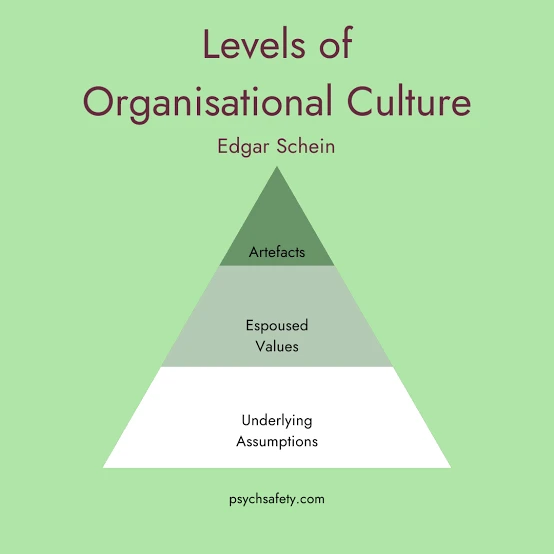
It is not the safety policy hanging in the lobby, nor is it the number of days since the last lost-time injury (LTI). As Edgar Schein’s model highlights, written policies and poster slogans are merely artefacts and espoused values. True culture lives deeper—in the underlying assumptions that drive daily operational trade-offs between speed, cost, and human safety.
Who Owns the Safety Culture?
A common failure mode in enterprise leadership is treating safety culture as the domain of the Health, Safety, and Environment (HSE) department.
- The HSE team does not own safety culture. The Board, the CEO, and operational leaders own it.
HSE professionals provide systems, guidance, and expertise, but culture is dictated by operational decision-making. When a plant manager decides whether to shut down a line for a minor safeguard issue or push through to hit a quarterly target, that moment defines the safety culture.
Managers who avoid these issues often do so because organizational reward structures implicitly value throughput over compliance. If leadership only measures safety by lagging indicators while rewarding short-term productivity, the shadow culture will always drift toward risk.
Why Blue-Chip Leaders Invest Heavily in Culture
Market leaders do not invest millions in safety culture simply to fulfil regulatory obligations or avoid fines. For top-tier global enterprise companies, safety culture is a core strategic imperative for three reasons:
1. High-Reliability Operations Protect Capital & Brand
For blue-chip organizations, a major critical failure isn't just an operational setback—it's a catastrophic threat to enterprise value, reputation, and ESG standing. Advanced safety cultures operate on High-Reliability Organization (HRO) principles: prioritizing psychological safety so operational warnings are escalated before they become public disasters.
2. Lagging Indicators Are Dangerous Distortions
A zero-incident rate can mean an organization is safe, or it can mean workers have learned not to report hazards. World-class organizations shift focus away from injury counts toward cultural maturity and psychological safety, measuring proactive hazard identification, reporting transparency, and leadership engagement.
3. Operational Integrity Drives Business Efficiency
Companies with mature safety cultures consistently outperform their peers in quality, retention, and productivity. Safe operations are predictable operations; a workplace that master's safety has invariably mastered discipline, communication, and process execution.
The Executive Mandate: Managing Culture Before It Manages You
As Schein observed, if executive leadership does not actively manage culture, the default culture will take over—shaped by frontline shortcuts, silence under pressure, and unaddressed hazards.
Transforming safety culture requires leaders to move beyond auditing systems and address the underlying assumptions of the workplace:
- Align Incentives: Ensure operational KPIs do not penalize leaders who pause production for safety concerns.
- Encourage Psychological Safety: Shift leadership responses to incidents from "Who failed?" to "What systemic condition made this mistake predictable?"
- Visible Leadership: Demonstrate that safety is an uncompromisable operating condition through executive presence and capital allocation, not just messaging.
To lead a enterprise organization is to recognize that safety culture is never static. It is either actively engineered toward high reliability or passively drifting toward failure.